Fish Diagnosis App Review: What It Can Do
- gerald294
- 1 uur geleden
- 6 minuten om te lezen
A fish that stops eating, clamps its fins, or develops a pale patch can decline quickly. The pressure to act is real, but treating the first disease that comes to mind is often how a manageable problem becomes a serious loss. This fish diagnosis app review looks at what a focused diagnostic app should provide when you need to move from a visible symptom to a defensible treatment decision.
For serious aquarium, pond, marine, and shrimp keepers, an app is not a substitute for observation, water testing, or professional veterinary advice when needed. Its value is speed and structure. A good app helps you compare what you see with documented disease presentations, consider likely causes, and avoid the costly habit of medicating blindly.
What a Fish Diagnosis App Must Do Well
Fish disease is difficult because many conditions look similar at first glance. A fish rubbing against objects may have external parasites, but it may also be reacting to ammonia, low oxygen, poor water quality, or irritation caused by a treatment. White spots can suggest ich, yet salt-like marks, excess mucus, breeding tubercles, lymphocystis, or other lesions can lead an inexperienced keeper in the wrong direction.
That is why the best diagnostic apps are built around recognition rather than vague symptom checklists. Clear color photographs are essential. They should show disease signs as they appear on real fish, including changes in skin, fins, gills, eyes, feces, body shape, and behavior. A single generic image is rarely enough. The user needs representative examples that make comparison possible.
The next requirement is practical explanation. Once a likely condition is identified, the app should explain what causes it, how it typically develops, what fish are most vulnerable, and which observations help distinguish it from similar problems. Treatment advice matters, but it should never be separated from diagnosis. A medication recommendation without diagnostic context invites misuse.
Video has a particular advantage in fish health. Still photographs can show ulcers, cysts, and damaged fins very well. Videos can reveal flashing, labored breathing, loss of balance, abnormal swimming, isolation, and the progression of a visible problem. Behavior is often one of the earliest and most informative diagnostic signs.
Fish Diagnosis App Review: Strengths in Real Use
A specialized app is most useful at the aquarium or pond, not at a desk. When you see a new lesion or an unusual pattern of mortalities, the ability to check a visual reference immediately can shorten the time between noticing a problem and taking sensible first steps. This is especially useful for keepers with multiple tanks, valuable koi, delicate marine fish, or shrimp colonies where small changes can become significant quickly.
The strongest format combines concise disease entries with substantial visual documentation. Users should be able to recognize the difference between a symptom and a diagnosis. For example, fin damage is not automatically fin rot. It may result from aggression, poor water conditions, mechanical injury, bacterial infection, or a mixed problem. An app that frames fin damage as a finding to investigate is more useful than one that pushes a single answer.
A well-organized fish health app should also support different types of ornamental aquatic animals. Freshwater tropical fish, pond fish, marine species, and shrimp do not share identical health risks, water conditions, or treatment tolerances. Copper-based treatments, salt, temperature changes, and many common medications may have very different consequences depending on the animal and system. Shrimp and other invertebrates require particular caution.
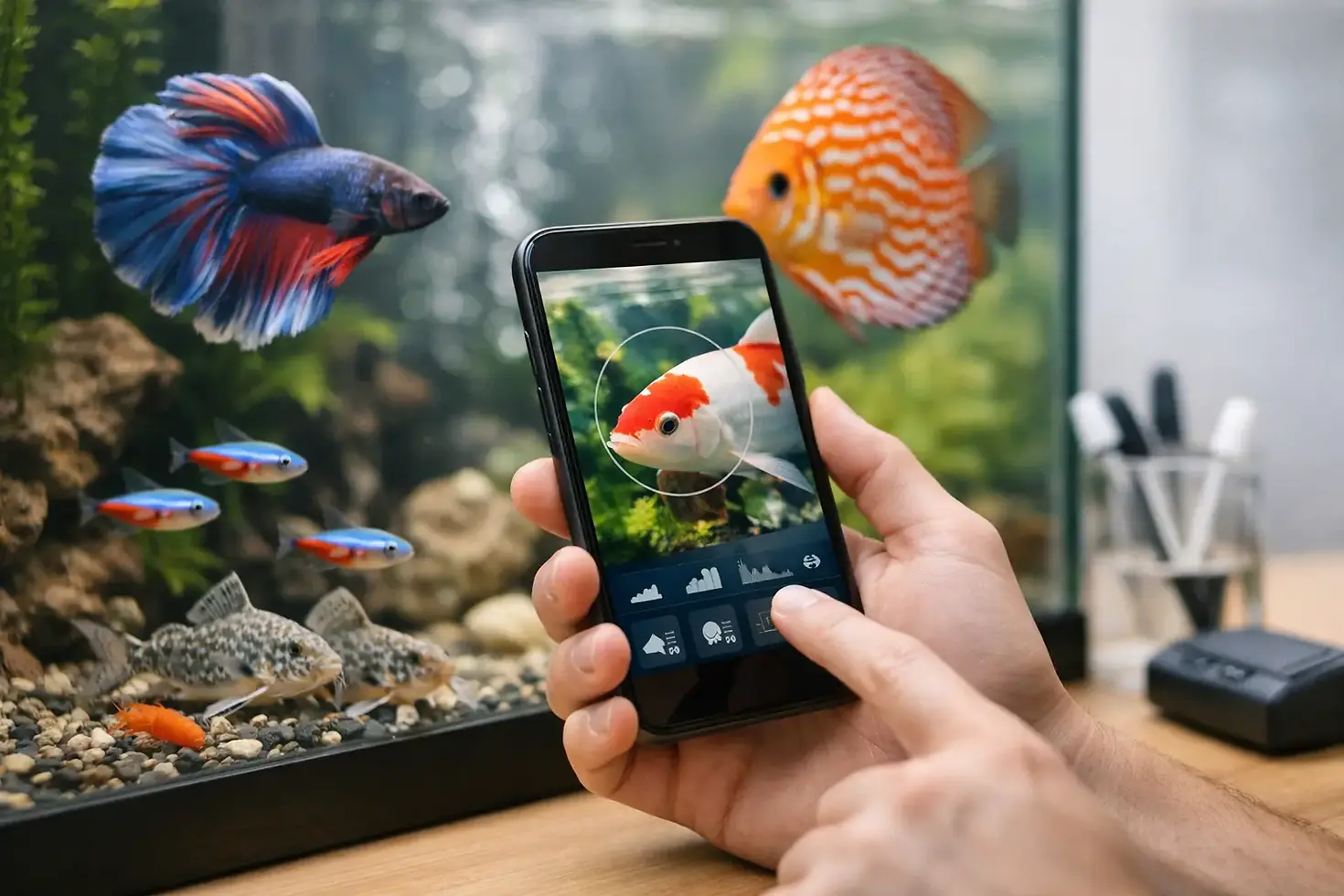
Gerald Bassleer Books approaches this need as a practical diagnostic reference, with extensive color photography and disease videos intended to help keepers recognize important conditions rather than guess from a short description. That visual emphasis is a meaningful advantage for users who learn best by comparing real cases.
The App Works Best as Part of a Diagnostic Routine
No image library can diagnose a fish in isolation. The app becomes far more accurate when used alongside basic observations and water measurements. Before selecting a treatment, check whether the problem affects one fish or many, whether it appeared suddenly or gradually, and whether the fish are breathing normally. Test temperature, ammonia, nitrite, nitrate, pH, and any other parameters relevant to the system.
This routine changes the quality of the diagnosis. If several fish are gasping near the surface after a filter failure, the immediate concern is oxygen and water quality, not a parasite entry that happens to resemble a secondary symptom. If only one new fish has white spots after quarantine was skipped, an infectious disease becomes more plausible. Context does not replace visual comparison. It gives it meaning.
Where an App Has Limits
The main limitation is that external appearance does not tell the full story. Two diseases can produce nearly identical lesions, and some serious conditions have few obvious external signs. Internal infections, nutritional problems, organ disease, and early parasite infestations may require microscopic examination, a skin scrape, a gill sample, or professional assessment.
Treatment recommendations also require judgment. The same visible disease may call for different actions in a display aquarium, a quarantine tank, a large pond, or a marine reef system. A medication that is reasonable in a bare hospital tank can be inappropriate around corals, sensitive plants, biological filtration, or invertebrates. The app should guide the user toward safe decision-making, not encourage a one-size-fits-all dose.
There is also a human limitation: confirmation bias. Once a keeper believes they have found the answer, it is easy to stop looking for conflicting signs. Use the app to compare several plausible conditions. Read the distinguishing features. If the match is uncertain, stabilize water quality, isolate affected fish where appropriate, and gather more evidence before adding medication.
Warning Signs That Need More Than an App
An app is an excellent first-line reference, but some situations call for urgent escalation. Rapid deaths, severe breathing distress, widespread ulcers, neurological signs, major abdominal swelling, and sudden illness across several tanks deserve immediate, careful attention. A pond with unexplained mortalities or a valuable breeding group with recurring losses may justify laboratory testing or consultation with an aquatic veterinarian.
The same is true when a treatment has failed. Repeating or stacking medications without confirming the diagnosis can damage fish, disrupt filtration, and obscure the original problem. Record what changed, which product was used, how long symptoms have been present, and the water test results. Accurate records are often as useful as the next treatment.
Who Will Get the Most Value From It?
This type of app is particularly valuable for keepers who take responsibility for health management before a crisis occurs. Beginners can use it to learn what normal and abnormal fish look like. Experienced hobbyists can use it as a fast reference when symptoms are subtle or when they want to verify a suspected condition. Retail staff, maintenance professionals, breeders, and pond service providers can benefit from having visual disease information available during routine inspections.
Its usefulness depends on expectations. If you want a tool that identifies every disease automatically from one photo, no app can reliably deliver that level of certainty. Fish health diagnosis depends on species, history, environment, behavior, water chemistry, and sometimes microscopy. If you want a compact, visual reference that helps you ask better questions and choose more appropriate next steps, the format is highly practical.
A Better Way to Use the App During an Outbreak
Start with the whole system, not the lesion. Observe the fish for several minutes, test the water, and check recent changes such as new livestock, missed maintenance, temperature swings, filter problems, or a new food. Then use the app to compare the most specific signs you can see: body location, lesion shape, mucus production, fin condition, gill movement, and behavior.
After identifying the most likely possibilities, read the entries for differences that would rule one in or out. Choose the least disruptive action that addresses the confirmed problem. In many cases, improving water quality, increasing aeration, removing a source of stress, and isolating affected fish are appropriate immediate measures while you continue diagnosis. Medication should be precise, correctly dosed, and compatible with the animals and aquarium or pond system.
The practical value of a fish diagnosis app is not that it removes judgment. It gives your judgment better evidence when every hour and every fish matters.


Opmerkingen