Shrimp Diseases in Aquarium: Signs and Causes
- gerald294
- 12 mei
- 6 minuten om te lezen
A shrimp colony rarely declines all at once. More often, the first warning is subtle - one animal stops grazing, another molts badly, a female drops eggs, or a few shrimp fade in color and hide. In cases of shrimp diseases in aquarium systems, these small changes matter. Early observation is often the difference between correcting a husbandry problem and losing an entire group.
Shrimp keepers often ask for a single treatment that will fix everything. That approach usually fails because similar symptoms can come from very different causes. A pale shrimp may be stressed by poor water quality, weakened by bacterial infection, or nearing a failed molt. White tissue in the body may suggest muscular necrosis, but it can also be confused with normal internal organs, recent stress, or postmortem change. Correct diagnosis starts with watching carefully, separating true disease from environmental damage, and resisting the urge to medicate blindly.
Why shrimp diseases in aquarium setups are often misread
Shrimp are small, transparent in part, and constantly changing through growth and molting. That makes diagnosis more difficult than with many aquarium fish. What looks dramatic is not always disease, and what looks minor can be the beginning of a serious outbreak.
The first trap is assuming every death is infectious. In many shrimp tanks, losses are linked first to instability - sudden shifts in temperature, pH, hardness, oxygen, or total dissolved solids. Shrimp tolerate less fluctuation than many keepers expect. A tank that appears clean can still be dangerous if mineral balance is poor, organic waste is building, or a recent change was too abrupt.
The second trap is overlooking toxin exposure. Shrimp react quickly to substances that fish may survive, including copper, aerosol contamination, residues from cleaning products, plant treatments, and unsafe medications. When several shrimp die after maintenance, a new decoration, or treatment in the aquarium, poisoning must stay high on the list of possibilities.
The third trap is treating a visible sign as the diagnosis itself. A failed molt is not always the primary problem. It may be the final result of nutritional deficiency, chronic stress, bacterial weakness, or unsuitable mineral conditions. The same is true for lethargy, color loss, and reduced feeding response.
The most common disease patterns in aquarium shrimp
A practical diagnosis begins with patterns, not guesses. When several shrimp show the same visible change, ask what tissue is affected, how fast it is progressing, and whether the problem is isolated to one animal or moving through the group.
Molting problems
Molting trouble is one of the most frequent reasons shrimp weaken or die. The shrimp may struggle to exit the old shell, remain trapped at the head or tail, or die shortly after molting. This is not always an infectious disease. In many aquariums it reflects unstable water parameters, poor mineral balance, nutritional gaps, or chronic stress from overcrowding and deteriorating water conditions.
Molting issues often appear after large water changes, rapid shifts in conductivity, or aggressive attempts to alter pH and hardness. The practical response is to stabilize conditions, review remineralization practices, and avoid repeated corrections that push the shrimp through another stress cycle.
Bacterial infections and shell disease
Bacterial problems in shrimp can present as lethargy, poor feeding, color change, opaque body areas, or black and brown lesions on the shell. External shell damage may start small and then deepen, especially in weakened animals. Once the protective cuticle is compromised, secondary infections become more likely.
These cases often develop in tanks with high organic load, excess detritus, decaying food, or heavy stocking. Treatment depends on severity and on what is legally and practically available, but the foundation is always environmental correction. If the tank remains dirty and unstable, even a temporarily successful treatment will not hold.
Muscular necrosis and opaque white tissue
When the tail muscles turn milky white or opaque, keepers often suspect a severe internal disease. Sometimes that is correct. Muscular necrosis can follow acute stress, bacterial involvement, physical injury, or severe water quality problems. Affected shrimp may become weak, lose coordination, and die quickly.
This sign deserves urgent attention, but it still requires caution. Not every pale area is true necrosis. Observe live shrimp under good light, compare several animals, and note whether the opacity is spreading through muscle tissue or simply a normal anatomical structure being seen more clearly after stress. Fast progression in multiple shrimp points to a serious problem and demands immediate review of oxygenation, temperature, waste load, and recent tank changes.
Fungal and fungus-like growths
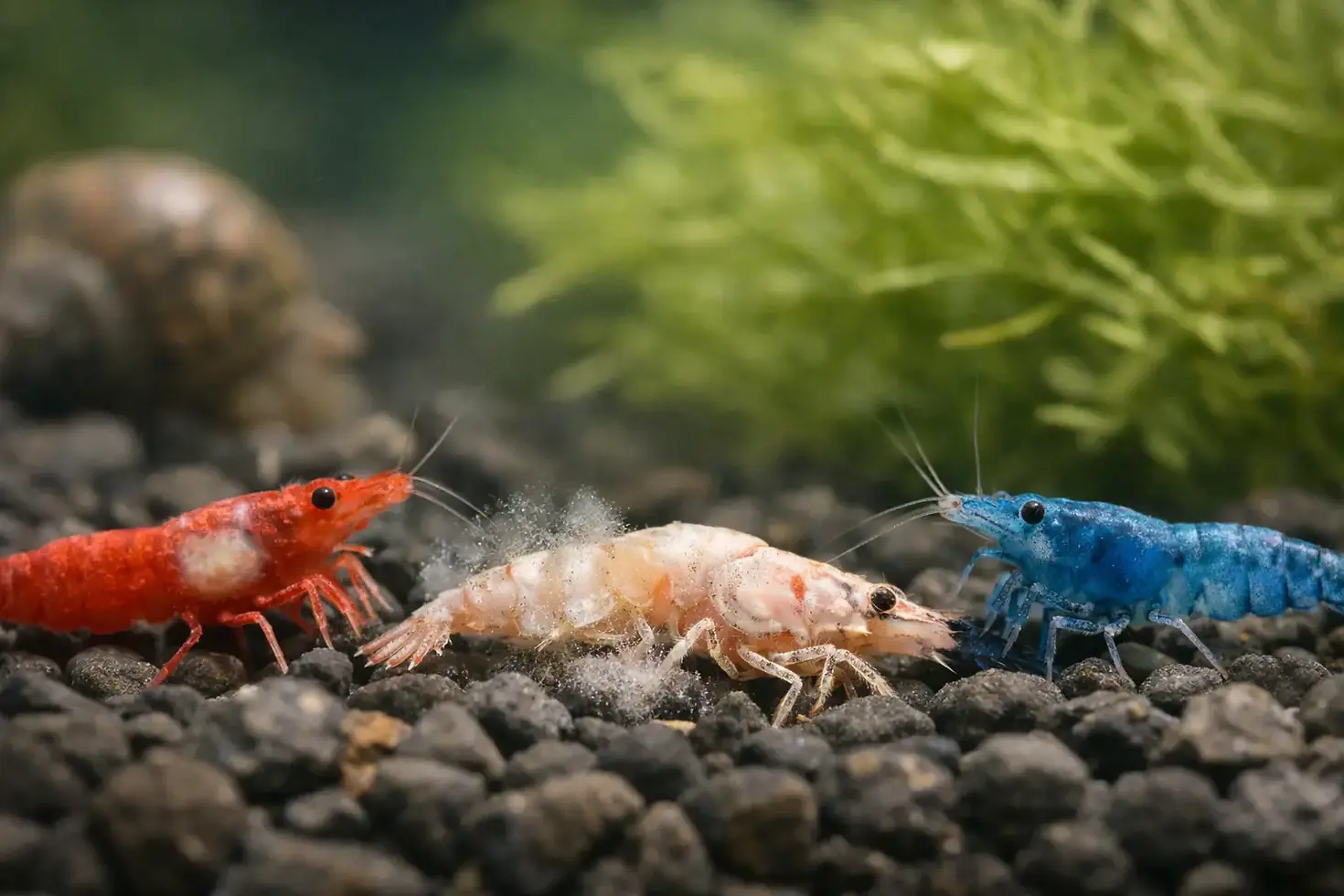
Cotton-like growth on shrimp, eggs, or injured body parts suggests fungal or fungus-like colonization. These organisms often take advantage of damaged tissue rather than attacking healthy shrimp first. Egg loss with fuzzy growth may reflect poor egg viability, stress in the female, or contamination after injury.
The practical question is not only how to suppress the growth, but why it gained access. Recent transport, rough netting, failed molts, and poor sanitation all increase risk.
Parasites and external hitchhikers
Some organisms found on shrimp are relatively harmless in low numbers, while others indicate a genuine health threat. Worm-like or protozoan organisms may attach to the rostrum, gills, legs, or shell. Heavily affected shrimp may appear irritated, weak, or less active. Gill involvement is especially serious because respiration can be compromised before obvious mortality begins.
Here, magnification matters. A quick look from across the room is not enough. Serious shrimp keepers benefit from close visual inspection because parasite shape, attachment site, and movement pattern help separate one problem from another.
Viral syndromes and unexplained rapid losses
Some shrimp losses move too quickly to be explained by ordinary husbandry alone. Sudden deaths, severe weakness, abnormal swimming, and a rapid spread through the colony can raise suspicion of viral disease. The challenge is that viral conditions are difficult to confirm without laboratory support, and many other emergencies can look similar at first.
In practical aquarium work, this means you should not label rapid mortality as viral simply because it is fast. First exclude poisoning, oxygen failure, temperature shock, and major water chemistry errors. Those causes are common, and they can kill with equal speed.
How to approach diagnosis without guessing
When facing possible shrimp diseases in aquarium populations, start with direct observation before any treatment. Watch living shrimp, not only dead ones. Note posture, feeding behavior, molting success, swimming pattern, egg carrying, and whether deaths affect juveniles, adults, or freshly imported animals first.
Then check the context around the outbreak. Ask what changed in the last 72 hours and in the last 2 weeks. New plants, fertilizers, medication residues, contaminated tools, substrate disturbance, filter cleaning, a missed top-off, overheating, and sudden remineralization errors all matter. Many shrimp crashes become understandable only when the timeline is reconstructed carefully.
Next, inspect the bodies closely. A flashlight, magnifying lens, and clear side view of the shrimp are often enough to reveal whether you are dealing with shell lesions, surface growth, opaque musculature, parasites, or molting damage. This is where visual reference material becomes essential. A good disease atlas with high-quality color photographs helps prevent the common mistake of treating the wrong condition.
Finally, separate emergency stabilization from targeted therapy. If water quality or toxin exposure is plausible, correcting the environment comes first. If a specific infectious pattern is visible, isolation, observation, and species-appropriate treatment can follow. Reaching for medication before stabilizing the tank usually wastes time and may make shrimp losses worse.
Treatment decisions: what helps and what harms
Shrimp are less forgiving of medication errors than many fish. A dose that seems mild can still be dangerous, especially in tanks with low water volume, soft water, or mixed invertebrates. Copper-based treatments are a classic hazard, but they are not the only one. Even products marketed broadly for aquarium disease may be unsuitable for shrimp.
That is why the first treatment rule is simple: never medicate a diagnosis you do not have. If shrimp are dying from oxygen depletion, a bacterial remedy will not save them. If they are suffering from toxic exposure, additional chemicals can intensify the damage.
The second rule is to reduce stress while investigating. Improve aeration, remove uneaten food, siphon waste carefully, verify temperature, and use only water that matches the tank closely during any corrective change. Large emergency water changes can help in poisoning events, but abrupt parameter swings can also worsen molting problems. It depends on the cause, which is why reading the pattern correctly matters.
The third rule is to think in systems. A shrimp disease problem is often not just about the individual animal. It reflects the interaction between pathogen pressure, water quality, nutrition, stocking density, and consistency of care. You can save more shrimp by correcting the system than by focusing only on the sickest specimen.
Prevention is mostly about stability
Healthy shrimp colonies are built on predictability. Stable mineral content, consistent feeding, clean but not sterile conditions, and careful acclimation prevent many of the cases that later look like disease. Quarantine also deserves more attention than it gets. New shrimp, plants, and even equipment can introduce parasites, pathogens, or toxic residues.
For keepers who want better outcomes, the most useful habit is disciplined observation supported by trustworthy visual diagnostics. Gerald Bassleer Books has long emphasized practical identification through representative images and treatment-focused guidance, and that approach fits shrimp health especially well. With shrimp, details are small, and small details decide the diagnosis.
When a shrimp looks wrong, slow down and look closer before acting. That single step prevents many losses, and it turns panic into useful information.


Opmerkingen